Introduction
There’s a specific moment a lot of home cooks hit with ice cream makers: they buy one, use it twice, and then it ends up shoved in the back of a cabinet because the process felt like more trouble than it was worth. Pre-freezing bowls, waiting around while a machine churns, and getting a texture that’s more like soft-serve slush than actual scoopable ice cream — that’s been the standard experience for a long time. So when a machine comes along that flips the whole process around, it’s worth taking a real look at how it actually works and whether it lives up to what it’s promising.
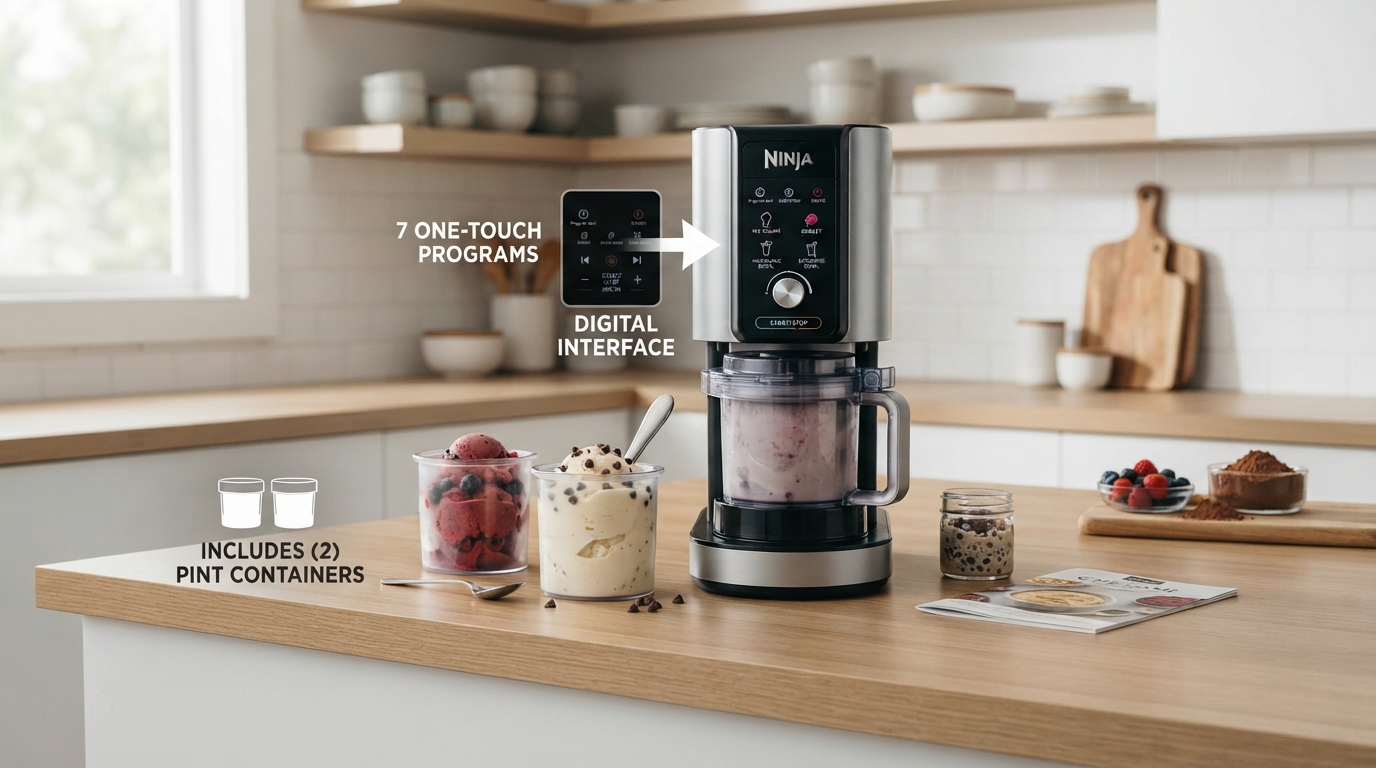
That’s the appeal behind the Ninja CREAMi Ice Cream Maker, model NC301. Instead of churning a liquid mixture while it slowly freezes, this machine works backwards: you freeze your base completely first, then let the machine do the work of turning that solid block into something smooth, creamy, and scoopable. It’s built to handle way more than plain vanilla ice cream too — gelato, sorbet, milkshakes, and smoothie bowls are all part of the lineup, thanks to seven built-in one-touch programs. Add in two reusable pint containers, a compact enough footprint to actually live on a counter, and a design that’s genuinely approachable for family use, and you’ve got an appliance that’s carved out a pretty specific and popular niche in home kitchens over the past few years.
This guide walks through exactly how the NC301 works, what it can realistically do, who tends to get the most value out of it, and the practical stuff — freezer space, planning ahead, cleanup — that’s worth thinking about before you decide if it belongs in your kitchen.
Understanding How the Ninja CREAMi Actually Works
Most people’s mental model of an ice cream maker involves a machine constantly moving or churning a liquid mixture as it gradually freezes, incorporating air along the way to create a lighter texture. The CREAMi system doesn’t do that at all. Instead, the process happens in two completely separate stages.
Stage one is freezing. You mix up a base — cream, milk, sugar, whatever flavorings you’re using — pour it into one of the included pint containers, snap on the lid, and put it in your regular freezer. It needs to freeze completely solid, which usually takes somewhere around 24 hours depending on your freezer and the specific recipe.
Stage two is processing. Once the base is frozen solid, you pop the container into the machine, choose one of the seven programs depending on what you’re making, and the machine takes over. Internally, it uses a mechanism that shaves down through the frozen block in layers and re-combines those shavings into a smooth, uniform texture. It’s almost more like a specialized food processor working on a solid block of frozen material than a traditional ice cream churn.
This two-step approach is really the whole reason the CREAMi can pull off so many different textures from the same basic system. Depending on which program you run — and sometimes depending on running a base through more than one cycle — you can end up with something dense and rich like gelato, something icy and light like sorbet, or something drinkable like a milkshake, all starting from a solid frozen base.
What Makes the NC301 Specifically Different
The CREAMi line has a few different models floating around, and the NC301 sits in a spot that emphasizes simplicity and compact size without stripping out the core functionality that makes the system work in the first place.
Seven One-Touch Programs
Instead of leaving you to guess at settings, this unit comes preloaded with seven dedicated programs. Generally speaking, these cover:
- Ice Cream — for a traditional, dairy-based scoopable texture
- Gelato — for a denser, richer result with less air incorporated
- Sorbet — for fruit-forward, typically dairy-free bases
- Milkshake — for a drinkable, blended consistency
- Smoothie Bowl — for a thick, spoonable, breakfast-style texture
- Along with a couple of additional specialized settings depending on how the lineup is configured
Instead of manually adjusting speed or time, you pick the program that matches what you’re making, and the machine handles the rest. That’s a meaningful simplification compared to older single-purpose ice cream machines that required you to babysit a churn cycle and guess when it was “done enough.”
Two Pint Containers Included
You get two of the containers right out of the box, which sounds like a small detail but actually matters a lot in daily use. Since the freezing step takes roughly a day, having two containers means you can have one flavor freezing while another is already done and ready to process, rather than being stuck waiting on a single container to cycle through the whole process before you can start on the next batch.
Compact Size
Compared to some kitchen appliances that end up eating half your counter, the NC301 is built to keep a relatively small footprint. That matters more than people expect — a lot of appliances get bought with good intentions and then get banished to storage because they simply don’t fit comfortably in day-to-day counter space. A more compact design at least gives this one a fighting chance at staying out and actually getting used regularly.
Built with Families in Mind
Because the whole process is essentially “pick a program, press a button,” this machine is often positioned as something older kids can help operate, with adult supervision, obviously. There’s no open flame, no complicated churning mechanism you have to monitor, and no need to guess when something’s “done” — the program handles the timing.
Practical Ways People Actually Use This Machine
It’s one thing to describe what a machine can technically do, and another to talk through how people actually incorporate it into a normal week. Here’s a rundown of the more common use cases.
Everyday Homemade Ice Cream
This is obviously the anchor use case. A basic dairy, sugar, and flavoring base gets frozen overnight and processed the next day into a finished, scoopable batch. People use this to control exactly what goes into their ice cream — sugar levels, specific flavor combinations, dietary substitutions — in a way that’s just not possible with something pulled off a grocery store shelf.
Gelato for a Denser, Richer Texture
If you’ve had gelato somewhere and noticed it feels heavier and richer than typical American-style ice cream, that’s largely down to less air being incorporated into the mixture and often a slightly different fat and sugar ratio. The gelato program on this machine is built to replicate that denser style using an appropriately formulated base.
Sorbet for Something Lighter
For anyone looking for a dairy-free option, or just something a little lighter and more fruit-forward, the sorbet setting handles fruit purée-based mixtures without needing dairy at all. This also happens to be a pretty natural fit for anyone dealing with lactose intolerance or dairy allergies in the household, since a fruit-based sorbet base sidesteps the dairy question entirely.
Milkshakes on Demand
Rather than needing a separate ice cream base recipe just for milkshakes, this machine can take a frozen mixture and process it directly into a drinkable, shake-style consistency using its dedicated program. That’s a nice shortcut for anyone who wants a milkshake without needing store-bought ice cream sitting around specifically for that purpose.
Smoothie Bowls for Breakfast
The smoothie bowl program leans toward frozen fruit and other typical smoothie ingredients, producing a thicker, spoonable result rather than something drinkable. This has become a pretty popular breakfast or snack option, especially among people who like a smoothie but want to eat it with a spoon and toppings rather than drink it through a straw.
Mixing In Extras After the Fact
Once a base has gone through its processing cycle, the machine supports adding mix-ins — things like chocolate chips, crushed cookies, chopped nuts, or fresh fruit — using a separate mix-in function that folds those extras into the already-processed base. This is a pretty close replica of the “add whatever you want” experience you’d get from a scoop shop that lets you customize your order, except you’re doing it at home with total control over exactly what goes in.
A Genuine Family Activity
Because the process boils down to “pick a base, freeze it, pick a program, add mix-ins,” it’s genuinely approachable enough for kids to get involved, whether that’s picking the mix-ins, choosing which program to run, or just being there for the “reveal” when a frozen block turns into something scoopable. It’s a lower-stakes kind of kitchen activity than, say, using a stovetop or an oven.
Who Tends to Get the Most Out of This Machine
Not every appliance is a fit for every household, and this one has a fairly specific profile of who benefits the most from owning it.
Families with kids who are into ice cream and frozen treats. The whole design leans into being approachable enough for family participation, which naturally makes it appealing to households with kids who want to be part of making dessert rather than just eating it.
People who want more than plain vanilla or chocolate. Since this system handles gelato, sorbet, milkshakes, and smoothie bowls in addition to standard ice cream, it tends to appeal more to people who like variety rather than sticking to a single go-to flavor and style.
Anyone who cares about controlling their ingredients. Making frozen desserts from scratch means you control the sugar content, avoid specific additives you might not want, and adjust for dietary needs like dairy-free or lower-sugar preferences.
Households without a ton of extra kitchen space. The relatively compact design makes it a more realistic fit for kitchens that can’t dedicate a lot of permanent counter real estate to a large appliance.
People who enjoy customizing with mix-ins. If part of the appeal of ice cream, for you, is the mix-ins and toppings rather than just the base flavor, the dedicated mix-in function is a genuine advantage here.
On the other hand, this might not be the right fit for someone who wants frozen dessert on a whim with zero advance planning, since the freezing step is non-negotiable and takes real time. It’s also probably overkill for someone who only wants ice cream a couple of times a year and would rather just buy a pint at the store.
Things Worth Thinking Through Before You Buy
You Have to Plan Ahead
This is probably the single biggest adjustment for anyone used to traditional churn-style machines. You can’t decide at 7pm that you want ice cream and have it ready in twenty minutes. The base needs to freeze solid first, which generally takes most of a day. If spontaneity is important to you, this is worth sitting with before buying.
Freezer Space Matters
The pint containers need to lie flat and freeze completely, which means you need actual usable freezer space to accommodate them. If your freezer’s already packed to the brim, this is worth thinking through before you commit to using this regularly.
Base Recipes Matter More Than You’d Think
Getting a smooth, properly textured final result depends a lot on using base recipes with the right fat, sugar, and liquid ratios. A base that’s too icy, or doesn’t have enough fat content, may not process into a smooth texture no matter how good the machine is. Following recipes designed specifically for this kind of system, at least while you’re getting a feel for it, will save you some frustration.
Two Containers Might Not Be Enough for Heavy Use
If you’re someone who wants to keep multiple flavors going at once, or you’re making frozen treats frequently for a bigger household, you might find yourself wanting extra pint containers beyond the two included. It’s worth checking whether additional containers are sold separately if you think you’ll be a frequent user.
There’s Regular Cleanup Involved
Like any food prep appliance, the containers, lids, and any parts touching the base mixture need to be cleaned after each use. It’s not an enormous chore, but it’s part of the overall time commitment that comes with using this machine regularly rather than as an occasional novelty.
It’s Not Silent
The processing step involves mechanically shaving down a solid block of frozen material and re-mixing it, so there’s a real, audible mechanical sound while it’s running. That’s completely normal for this type of appliance, but worth knowing going in if you’re sensitive to appliance noise.
Supervision Still Matters for Kids
Even though this machine is often marketed as kid-friendly, that doesn’t mean unsupervised. Adult oversight is still a good idea any time kids are operating a kitchen appliance, especially anything involving moving mechanical parts.
How This Compares to Other Ice Cream Making Options
It helps to zoom out and look at the broader landscape of home ice cream makers, without picking a fight with any specific competing brand.
Freeze-first, then-process machines (like the CREAMi) rely on a completely frozen base that gets processed afterward. The upside is a wider range of achievable textures and dessert styles, plus a built-in mix-in function, but the trade-off is that you have to plan ahead since the freezing step takes real time.
Traditional churn-style machines work the more “classic” way — churning a liquid base while it freezes, either using a bowl you pre-froze yourself or a machine with a built-in compressor. These can sometimes get you finished ice cream in one sitting without a separate freezing step beforehand, but the texture tends to be less consistent, and you generally don’t get the same variety of built-in programs for different dessert styles.
Soft-serve machines are their own separate category entirely, built around a continuously dispensed, soft texture rather than a firmer, scoopable result. They’re more specialized toward one specific style of frozen treat rather than offering the range this kind of system supports.
So which one makes sense for you? It really comes down to how much you’re willing to plan ahead versus how much you want ice cream on a moment’s notice, plus how much variety you want in terms of texture and dessert type. If you’re the kind of person who doesn’t mind prepping something the night before and wants a wide range of options — gelato one week, sorbet the next, milkshakes for a random Tuesday — the freeze-and-process approach tends to be the better fit. If you want something faster and don’t care as much about variety, a traditional churn machine might suit you better.
Experimenting With Flavors and Seasonal Batches
One thing that tends to surprise new owners is just how much room there is to experiment once you get comfortable with the basic process. Once you understand how a base needs to be balanced, in terms of fat, sugar, and liquid, to process smoothly, you can start branching out well beyond a standard vanilla or chocolate base.
Seasonal fruit bases are a pretty natural direction to take things, since fresh fruit purées work well in both the sorbet and ice cream programs depending on how much dairy you add. Summer stone fruits, fall pumpkin or apple-based mixtures, even holiday-flavored bases built around things like peppermint or eggnog, can all be adapted using the same core process, just with different base ingredients swapped in.
Coffee and tea-infused bases are another popular direction, especially for the gelato program, since gelato’s denser texture tends to hold up well against stronger, more assertive flavors like espresso or matcha without getting lost the way a lighter, more air-incorporated ice cream base sometimes can.
Layered or swirled mix-ins are also worth exploring once you’re comfortable with the basic mix-in function. Rather than just folding in a single mix-in like chocolate chips, some people like adding a sauce swirl, caramel, fruit compote, or chocolate syrup, alongside a textural mix-in like cookie pieces or nuts, to build something closer to a specialty ice cream shop flavor.
Batch planning for gatherings is another practical use of the two included containers. If you know you’re hosting people over a weekend, freezing two different bases a day or two ahead of time lets you offer a couple of flavor options without needing to scramble on the day of the event itself.
None of this is necessary to get good use out of the machine, plenty of people are perfectly happy running the same one or two go-to recipes on repeat, but it’s worth knowing that the ceiling for experimentation is pretty high if that’s something that appeals to you.
Frequently Asked Questions
How long does the base actually need to freeze? It varies somewhat by recipe, but generally you’re looking at a solid freeze of around 24 hours to get a good result. Checking the specific guidance that comes with the machine, or with whatever recipe you’re using, is the most reliable way to know for sure.
Can I make a dairy-free or lower-sugar version? Yes, plenty of recipes designed for this kind of system account for dairy-free or lower-sugar substitutions. Just know that swapping ingredients can affect how the base freezes and processes, so it’s worth using recipes that are specifically built around those substitutions rather than just guessing at conversions on your own.
Do I add mix-ins before freezing or after processing? Generally after. Mix-ins are added using a separate function once the base has already gone through its processing cycle, since larger pieces frozen directly into the base beforehand tend not to distribute evenly.
Is this hard for kids to operate? The one-touch program setup makes the operational side pretty simple, but as with any kitchen appliance, adult supervision is a good idea, especially when it comes to loading containers and running the processing cycle itself.
How many flavors can I realistically keep going? With two containers included, you can have two separate bases or flavors in rotation at once. If you want more than that going simultaneously, you’d need to look into additional containers separately.
Does it need to be cleaned every single time? Yes — like most food prep equipment, anything that touches the base mixture, containers, lids, blades, should be cleaned after each use to keep things sanitary and keep the machine performing well over time.
Final Thoughts
The Ninja CREAMi, model NC301, takes a genuinely different approach to homemade frozen desserts than what most people grew up with. By flipping the traditional process — freeze first, then process — it opens the door to a much wider range of textures and dessert styles than a typical churn machine can offer, all while keeping the actual operation about as simple as picking a program and pressing a button. With two included pint containers, a mix-in function for customization, and a compact enough design to actually live on your counter, it’s built to be a genuinely usable, family-friendly appliance rather than something that gets used twice and forgotten.
The main trade-off is planning ahead. If you’re okay with freezing a base the night before, this machine opens up a lot of possibilities — gelato, sorbet, milkshakes, smoothie bowls, and traditional ice cream, all from one compact unit. If spontaneity matters more to you than variety, it’s worth weighing that against a traditional churn-style machine instead.